Residential Solar — Component Deep-Dive
Component Deep-Dive
What Each Part Looks Like
Before diving into specs and brands, here is what you are actually buying — a visual map of every major component and where it lives in your home:
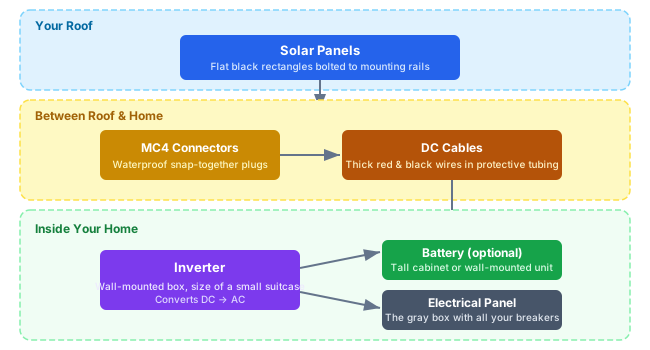 Where every major component lives in your home — from rooftop panels down through cables to your indoor inverter, battery, and electrical panel.
You've picked a budget tier. Now it's time to understand what you're actually buying. Every solar system has four core components: panels, an inverter, batteries (optional), and mounting hardware. Each has a confusing landscape of brands, technologies, and price points — especially in the Philippine market where tiangge distributors, Facebook sellers, and official dealers all coexist.
This section cuts through the noise. We'll cover what actually matters in each category, show you real Philippine market pricing, and tell you where you'll overpay if you're not careful.
Solar Panels
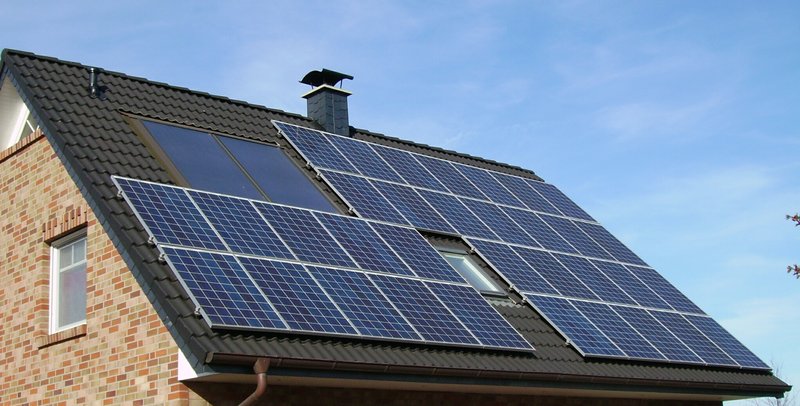 Solar panels mounted on a residential roof — the flat black rectangles you see on rooftops everywhere. Each panel weighs about 25kg and is roughly the size of a door.
Monocrystalline vs Polycrystalline
If a seller is pushing polycrystalline panels in 2025, walk away. Poly was the budget choice a decade ago — it's been completely displaced by mono in both price and performance.
| Type | What It Is | Pros | Cons | Verdict |
|---|---|---|---|---|
| Monocrystalline | Made from a single silicon crystal structure | Higher efficiency (20–23%), better low-light performance | Slightly higher price (but gap has nearly closed) | Buy this — the only sensible choice for new installs |
| Polycrystalline | Made from multiple silicon crystal fragments melted together | Cheaper to manufacture | Lower efficiency (15–17%), fades faster, outdated technology | Avoid — no longer makes economic sense |
All tier-conscious buyers today are looking at monocrystalline — the real question is which type.
Panel Cell Technologies
In 2026, N-type panels have captured over 60% of global production. PERC is being phased out. Here's every technology you'll encounter, ranked from budget to cutting-edge:
| Type | What It Is | Efficiency | Temp Coefficient | Degradation | PH Price Range | Verdict |
|---|---|---|---|---|---|---|
| PERC (Passivated Emitter Rear Cell) | Old mainstream — a reflective rear layer bounces unused light back through the cell | 20–22% | -0.35%/°C | ~0.5%/yr | ₱4,400-4,800/550W | Legacy — still sold but being replaced by N-type everywhere |
| N-Type TOPCon (Tunnel Oxide Passivated Contact) | Current standard — a special oxide layer dramatically reduces wasted energy inside the cell | 22–24% | -0.29%/°C | ~0.4%/yr | ₱5,700-7,500/585-620W | Best value — the sweet spot for most PH buyers in 2026 |
| HJT (Heterojunction Technology) | Premium — combines crystalline + amorphous silicon for the best heat handling | 23–24% | -0.24%/°C (best) | ~0.3%/yr | ₱8,000-12,000/430-450W | Best for PH heat — lowest power loss on 35°C+ days |
| IBC/HPBC (Interdigitated/Hybrid Back Contact) | All electrical contacts hidden on the back — front is pure unobstructed silicon | 23–24.5% | -0.27%/°C | ~0.35%/yr | ₱7,000-9,000+ | Highest efficiency — LONGi HPBC, SunPower Maxeon |
| ABC (All Back Contact) | Aiko's version of back-contact — zero grid lines on front, maximum light absorption | 24–25% (highest) | -0.26%/°C | ~0.35%/yr | ₱6,900-7,600/650W | Cutting edge — highest output per panel available in PH |
What does temperature coefficient mean for you?
Philippine rooftops hit 50-60°C. Every panel loses power as it heats up. The temperature coefficient tells you how much:
- PERC (-0.35%/°C): At 55°C roof temp, loses 10.5% of rated power
- TOPCon (-0.29%/°C): At 55°C, loses 8.7% — saves ~2% more than PERC
- HJT (-0.24%/°C): At 55°C, loses 7.2% — saves ~3.3% more than PERC
Over 25 years in PH heat, HJT produces ~8% more total energy than PERC from the same panel size. That's real money.
Other Design Features to Know
| Feature | What It Means | Why It Matters |
|---|---|---|
| Half-cut cells | Each cell is sliced in half — 120 or 144 half-cells instead of 60/72 full cells | Reduces power loss, better shade tolerance (if ONE half-cell is shaded, only half the panel drops — not the whole thing). Standard on all modern panels 500W+. |
| Multi-busbar (MBB/SMBB) | 9-16 thin wire ribbons across each cell instead of the old 3-5 thick busbars | Less silver used (cheaper), light hits more cell surface (higher efficiency), micro-cracks have less impact. Look for 9+ busbars. |
| Dual glass (glass-glass) | Glass on BOTH front and back instead of glass-front + plastic backsheet | More durable in humidity and salt air (important in PH coastal areas), required for bifacial, heavier (~28-32kg vs 25kg), longer warranty (often 30 years) |
| Shingled cells | Cells overlap like roof tiles instead of being spaced apart | Eliminates gaps between cells = more active area per panel. Slightly cheaper but less common in PH market. |
Monofacial vs Bifacial
Most panels 580W+ are now bifacial — they generate electricity from both the front AND back of the panel.
| Type | How It Works | Extra Output | Best For | Price Difference |
|---|---|---|---|---|
| Monofacial | Generates power from the front only | 0% (baseline) | Dark roofs, flat-mount installations | Standard price |
| Bifacial (dual glass) | Generates power from both sides — light reflects off the roof/ground and hits the back of the panel | +5-15% extra production | Light-colored roofs (white, silver GI sheet), elevated/tilt-frame mounts with gap underneath | +5-10% more per panel |
Bifacial on Philippine Metal Roofs
Most PH homes have silver/galvanized GI sheet roofing — this is actually ideal for bifacial panels because the shiny metal reflects sunlight onto the panel's back side. If your roof is dark (painted black/dark gray), the bifacial gain drops to only ~3-5%. On a silver GI roof with proper mounting gap (10-15cm), expect 8-12% extra output for free.
Brand Tiers and Philippine Pricing
Here are real prices from both retail (SRP from distributors/Lazada) and installer channels (sourced from Facebook Solar Pilipinas group, QC-area installers, April 2026):
| Brand | Wattage | Type | Installer Price | SRP (Retail) | Notes |
|---|---|---|---|---|---|
| JA Solar | 585W | Bifacial N-Type | ₱5,700 | ₱6,900 | Best value bifacial — widely available, proven track record |
| Sunket | 600W | Bifacial N-Type | ₱6,300 | ₱7,300 | Good mid-range option |
| Nuuko | 620W | Bifacial N-Type | ₱6,600 | ₱7,400 | Strong contender at 620W |
| Jinko | 620W | Bifacial N-Type | ₱6,700 | ₱7,500 | Premium Tier-1, best warranty |
| Aiko | 650W | ABC (All Back Contact) | ₱6,900 | ₱7,600 | Cutting-edge ABC cell tech — no grid lines, all-black, 25% efficiency |
| Trina Solar | 620W | Bifacial N-Type TOPCon | ~₱5,900 | ~₱6,500 | Vertex N series, strong brand |
| Trina Solar | 700-730W | Bifacial N-Type TOPCon | ~₱7,500-8,500 | ~₱8,500-9,500 | Vertex N 700+ series — largest residential panels available. 2.38m × 1.30m (~3.1 sqm). Best for large roofs. |
| Risen Energy | 700W | Bifacial HJT | ~₱8,000 | ~₱9,000 | HJT technology — best heat performance at 700W+ |
| Risen | 550W | Mono PERC | ~₱4,400 | ~₱4,800 | Budget option, older tech |
| REC | 430W | HJT | — | ₱9,000–12,000 | Top-tier, best-in-class 40yr warranty |
700W+ Panels — Do You Need Them?
Panels above 650W are physically larger (~3.1 sqm vs 2.79 sqm for 620W) and heavier (~35-38kg). They're ideal for large roofs (60+ sqm) where you want maximum power from fewer panels. For most PH residential roofs (30-50 sqm), the 620W panel remains the sweet spot — 700W panels are harder to handle during installation and may not fit standard mounting rail spacing.
Installer vs Retail Pricing
Installer prices are ₱700-1,200 cheaper per panel because they buy in bulk directly from distributors. If you're doing semi-DIY (buy parts yourself, hire electrician), join Facebook Solar Pilipinas and ask for installer pricing — many will sell panels even without an install contract.
Per-watt benchmarks: Expect ₱9-11/W at retail (SRP) and ₱8-10/W from installers. The savings from going through an installer for panels alone can be ₱7,000-12,000 on a 10-panel system.
Buying Direct vs Installer-Supplied
Many installers bundle panels at a fixed per-panel price with no line-item transparency. Ask for a bill of materials with model numbers before signing anything. You can then cross-check against Lazada, Shopee, or distributor price lists to understand the markup you're paying.
550W vs 620W — Which Panel Size?
If your roof space is limited (under 50 sqm usable), 620W N-Type TOPCon panels are worth the premium:
| Spec | 550W (PERC) | 620W (N-Type TOPCon) |
|---|---|---|
| Dimensions | 2,278 x 1,133 mm | 2,465 x 1,134 mm |
| Area per panel | 2.58 sqm | 2.79 sqm (8% larger) |
| Watts per sqm | 213 W/sqm | 222 W/sqm (4% denser) |
| Efficiency | 20-22% | 22-23.3% |
| Weight | ~28 kg | ~34.6 kg |
| Temp coefficient | -0.35%/°C | -0.29%/°C (better in PH heat) |
| Degradation | ~0.5%/yr | ~0.4%/yr |
| Price per panel (PH) | ₱4,500-5,000 | ₱5,700-6,500 |
The Real-World Advantage
On paper, 620W panels only give 2-4% more watts per sqm. But in Philippine heat (35°C+ roof temperatures), the better temperature coefficient adds ~3-5% real-world production. Combined with slower degradation (0.4% vs 0.5%/yr), you get ~7-8% more total energy over 25 years for ~17% more cost. On a space-constrained roof where you can't just add more panels, that's worth it.
Verdict: If your roof can fit 12+ panels of either size, go with 550W — cheaper per watt and the volume makes up the difference. If you're limited to 10-11 panels or fewer, go 620W N-Type TOPCon.
Roof Space Calculator
Use this calculator to estimate how many panels fit on your roof, your expected production, monthly savings, and payback period — all calculated live as you adjust the sliders.
Step 1: Measure your usable roof area
Your total roof area minus obstructions (vents, antennas, water tanks, AC units) and access gaps. Rule of thumb: usable area ≈ 70-80% of total roof.
How to Actually Measure Your Roof (Including Non-Flat Roofs)
Flat roof or very low pitch: Measure length × width from the ground using a tape measure. Or use Google Maps satellite view — right-click → "Measure distance" to trace your roof outline. It gives you the area.
Sloped / pitched roof (most PH homes): Your roof is NOT the same area as your floor plan — a sloped roof is larger because it's angled. To get the actual roof area:
- Measure the floor area under the roof (length × width = e.g., 8m × 5m = 40 sqm)
- Estimate the roof pitch (how steep it is):
| Roof Type | Typical Pitch | Multiplier | Example: 40 sqm floor |
|---|---|---|---|
| Nearly flat (GI sheet, slight slope) | 5-10° | × 1.01-1.02 | 40.4-40.8 sqm |
| Standard slope (most PH homes) | 15-25° | × 1.04-1.10 | 41.6-44.0 sqm |
| Steep slope (cathedral/A-frame) | 30-45° | × 1.15-1.41 | 46.0-56.4 sqm |
-
For gable roofs (two sloped sides meeting at a peak): Only ONE side faces the right direction for solar. Measure that side only, or use both if east-west facing.
-
Subtract obstructions: Walk your roof (or look at satellite) and subtract:
- Water tank: ~1.5 sqm
- Satellite dish: ~0.5 sqm
- Vent pipes: ~0.2 sqm each
- AC outdoor unit: ~1 sqm
- Edge clearance: 0.5m from all edges (safety + wind load)
-
Quick method: If you can't climb up, use Google Maps satellite → Measure tool. It measures the flat projection, so multiply by the pitch factor above.
Example: Typical Filipino Bungalow
- Floor area: 8m × 5m = 40 sqm
- Roof pitch: ~15° (standard GI sheet slope) → × 1.04 = 41.6 sqm actual roof
- Subtract: 1 water tank (1.5 sqm) + 1 AC unit (1 sqm) + edge clearance (~4 sqm) = 6.5 sqm
- Usable roof area: 41.6 - 6.5 = ~35 sqm
| Total Roof Area | Usable Area (~75%) | Max 550W Panels | 550W System | Max 620W Panels | 620W System |
|---|---|---|---|---|---|
| 20 sqm | ~15 sqm | 5 panels | 2.75 kWp | 5 panels | 3.10 kWp |
| 25 sqm | ~19 sqm | 7 panels | 3.85 kWp | 6 panels | 3.72 kWp |
| 30 sqm | ~23 sqm | 8 panels | 4.40 kWp | 8 panels | 4.96 kWp |
| 35 sqm | ~26 sqm | 10 panels | 5.50 kWp | 9 panels | 5.58 kWp |
| 40 sqm | ~30 sqm | 11 panels | 6.05 kWp | 10 panels | 6.20 kWp |
| 50 sqm | ~38 sqm | 14 panels | 7.70 kWp | 13 panels | 8.06 kWp |
| 60 sqm | ~45 sqm | 17 panels | 9.35 kWp | 16 panels | 9.92 kWp |
| 80 sqm | ~60 sqm | 23 panels | 12.65 kWp | 21 panels | 13.02 kWp |
Step 2: Estimate daily production
Multiply your system size by Philippine Peak Sun Hours (PSH):
| Location | PSH (avg) | 5.5 kWp Daily | 6.2 kWp Daily | 8 kWp Daily |
|---|---|---|---|---|
| Metro Manila | ~4.5 hrs | 24.8 kWh | 27.9 kWh | 36.0 kWh |
| Cebu | ~5.0 hrs | 27.5 kWh | 31.0 kWh | 40.0 kWh |
| Davao | ~4.8 hrs | 26.4 kWh | 29.8 kWh | 38.4 kWh |
| Palawan | ~5.2 hrs | 28.6 kWh | 32.2 kWh | 41.6 kWh |
| Baguio | ~4.0 hrs | 22.0 kWh | 24.8 kWh | 32.0 kWh |
These are ideal estimates
Real-world production is typically 75-85% of these numbers due to heat losses, inverter efficiency, shading, dirt, and cable losses. See the Solar Site Assessment section below for a detailed loss calculator.
Step 3: Example roof layout (40 sqm with 620W panels)
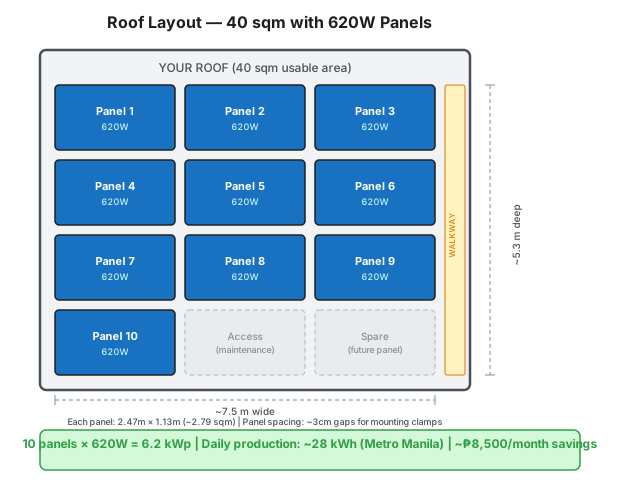 A typical 40 sqm roof fits 10 × 620W panels in a 3-column layout with walkway access and room for a future 11th panel. Dimensions shown include mounting gaps.
What to Check on Panel Specs
Beyond cell technology and brand tier, always verify:
- Power Tolerance: Should be 0/+5W or better (positive-only tolerance). Avoid panels with negative tolerance (−3/+3W).
- Temperature Coefficient (Pmax): Lower is better. For tropical climates, target ≤ −0.35%/°C (TOPCon/HJT beats PERC here).
- Product Warranty: 12–15 years minimum. Top brands offer 25–30 years.
- Performance Warranty: 25–30 years at ≥80% output. Check the degradation curve, not just the headline number.
Inverters
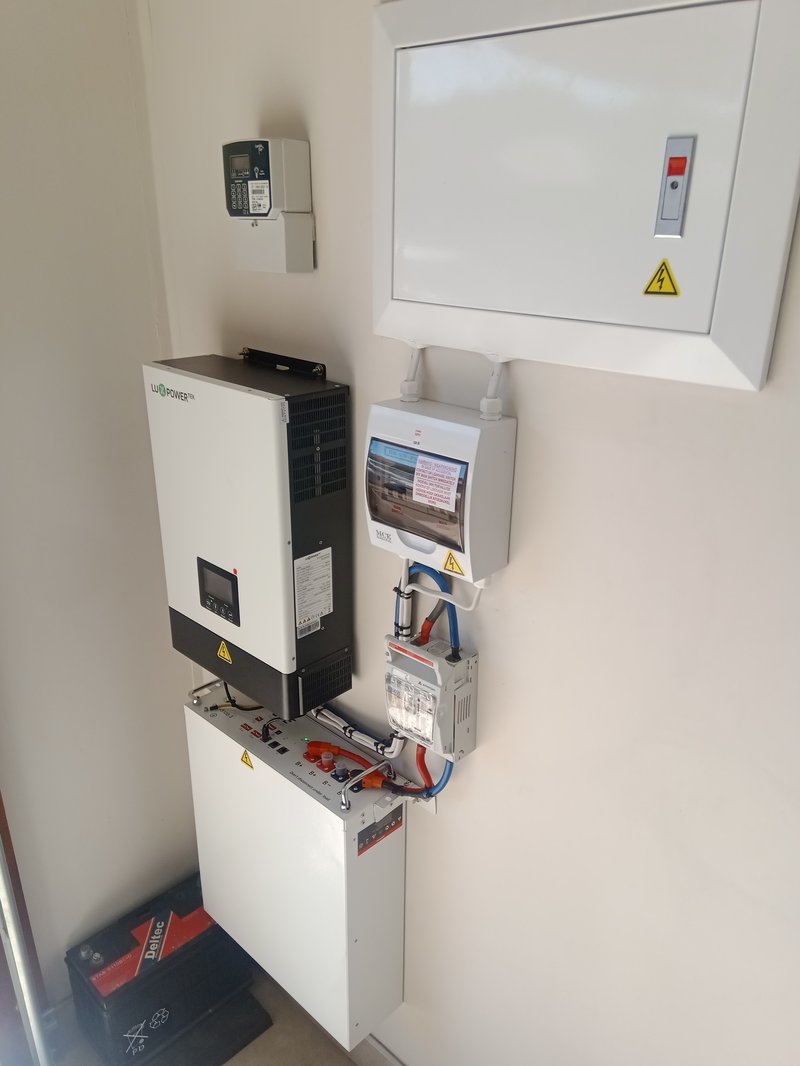 A hybrid inverter (top) with a wall-mounted LiFePO4 battery (bottom). About the size of a small suitcase, mounted on your wall near your electrical panel. Image: Wikimedia Commons, CC BY-SA 4.0

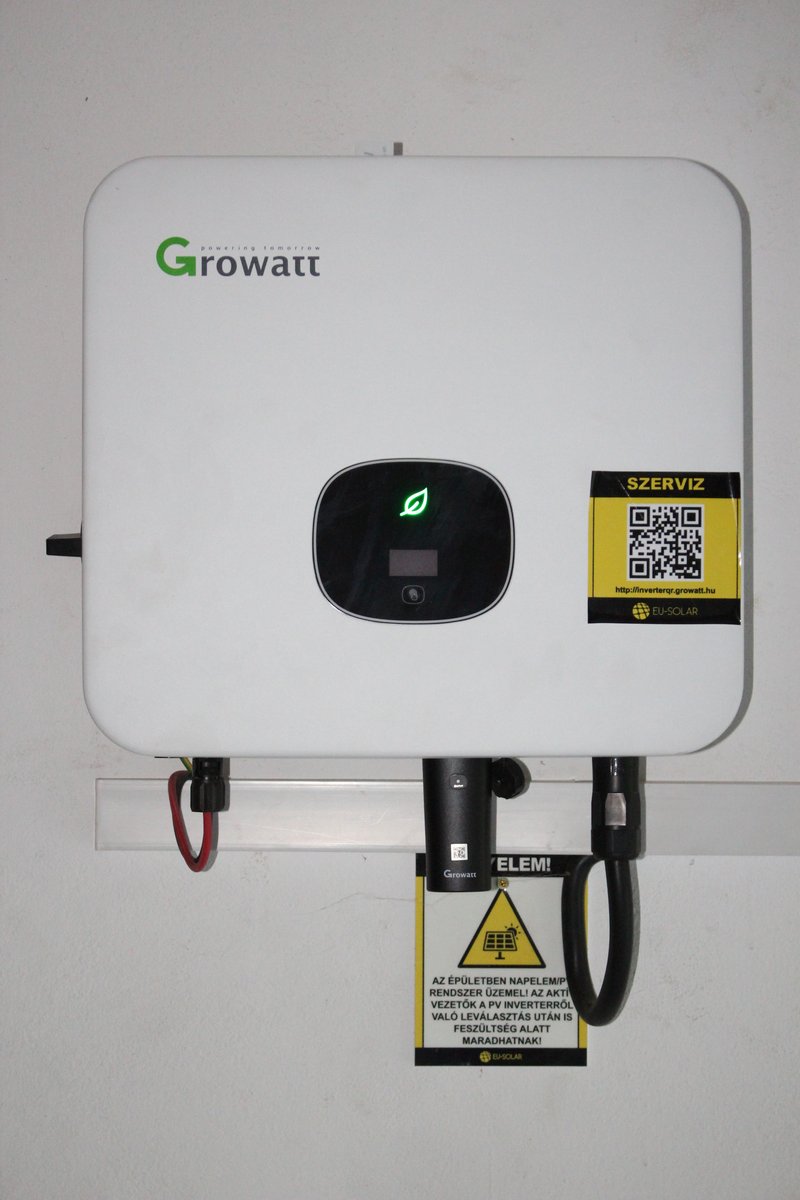 A Growatt string inverter — a popular budget choice in the Philippines. Image: Wikimedia Commons, CC BY 4.0

The inverter is the brain of your system — it converts DC power from the panels into AC power your home can use. It's also the component most likely to fail first and the one with the most homelab-relevant features (monitoring, grid interaction, battery management).
String vs Micro Inverters
| Type | What It Is | Pros | Cons | Verdict |
|---|---|---|---|---|
| String Inverter | One central box on your wall — all panels connect to it in a chain (called a "string") | Lower cost, simpler installation, easier to maintain and replace | Shading one panel reduces the whole chain's output | Best for most PH homes — shade is rarely an issue on typical rooftops |
| Microinverter | A small inverter attached to each individual panel on the roof | Each panel works independently (shade on one doesn't affect the rest), per-panel monitoring | Micro-inverters cost 2-3 times more than a single string inverter, and if one breaks, a technician needs to go up on the roof to fix it. Enphase is the main brand. | Only if you have serious shade problems — trees, neighboring buildings partially covering your roof |
 How panels wire together in "strings" — connected in series so voltage adds up, then both strings feed into the inverter's MPPT inputs. This is what "string inverter" means.
For most Philippine homes: string inverter.
Grid-Tied vs Hybrid
Grid-tied inverters export excess power to the grid (or curtail it if no net metering) and shut down during outages (for lineworker safety). Lower cost. No battery capability.
Hybrid inverters manage both grid and battery connections simultaneously. They can charge batteries from panels or grid, discharge batteries during outages or peak hours, and maintain critical loads when the grid goes down. Cost is typically 30–50% more than a comparable grid-tied unit.
If you want brownout backup capability — which is most Philippine homeowners — you want a hybrid inverter.
Brand Comparison
| Brand | Type | 5kW Price | HA Integration | Best For |
|---|---|---|---|---|
| Deye | Hybrid | ₱51–56K | HACS Solarman (local) | Best value PH hybrid |
| Growatt | Grid/Hybrid | ~₱50K | Native core (cloud) | Cost-effective |
| GoodWe | Grid/Hybrid | ~₱63K | Native core (local UDP) | Best native HA |
| Huawei SUN2000 | Hybrid | ~₱65K | HACS Modbus (local) | Most feature-rich HA |
| LuxPower | Hybrid | ₱50–96K | Community | Good alternative |
| Sungrow | Hybrid | ~₱55-70K | HACS (local Modbus) | Spotted in PH FB groups (6kW hybrid). Growing PH presence. |
| Fronius | Grid-tied | ~₱85K | Native core (local) | Premium European |
Home Assistant Integration
If you run Home Assistant (or plan to), inverter selection matters beyond price. GoodWe and Fronius offer local-network integrations with no cloud dependency. Deye/Solarman and LuxPower work via community HACS integrations with local polling. Growatt's official integration routes through the cloud. Huawei SUN2000 with a local RS485 Modbus connection is the most powerful but requires more setup.
Deye has become the dominant hybrid choice in the Philippine market — widely stocked by distributors, good community support, and competitive pricing. It's the safe default if you don't have specific HA integration requirements.
Inverter Technology Trends (2026)
| Innovation | What It Means | Status | Impact for PH Buyers |
|---|---|---|---|
| GaN semiconductors | Gallium Nitride chips replace silicon — inverters become smaller, lighter, and hit 99% efficiency (vs 96-97% today) | Available in microinverters (Enphase IQ9). Coming to string inverters. | Not critical yet for PH residential, but watch for GaN-based Deye/Growatt models in 2027 |
| SiC semiconductors | Silicon Carbide chips for high-power inverters — better heat handling and efficiency | Available in commercial inverters. Residential models emerging. | Relevant for 10kW+ systems — better performance in PH heat |
| AI-powered MPPT | Machine learning algorithms that predict shade patterns, weather, and optimize power extraction in real-time | Built into latest Huawei SUN2000, SolarEdge, and Enphase systems | Real benefit in PH — monsoon clouds and partial shade are common. AI MPPT adapts faster than traditional algorithms |
| Panel-level optimizers | Small boxes attached to each panel that optimize individually (like microinverters but cheaper) | SolarEdge is the leader. Tigo and Huawei also offer them. | Solve the shade problem — if one panel is shaded, only that panel drops, not the whole string. Worth it if you have partial shade. |
| Integrated EV charging | Inverters with built-in EV charger management — no separate charger controller needed | SolarEdge, Fronius, and Enphase offer integrated solutions | Still premium-priced. For PH, a separate go-e/OpenEVSE charger with HA automation is cheaper and more flexible. |
Batteries
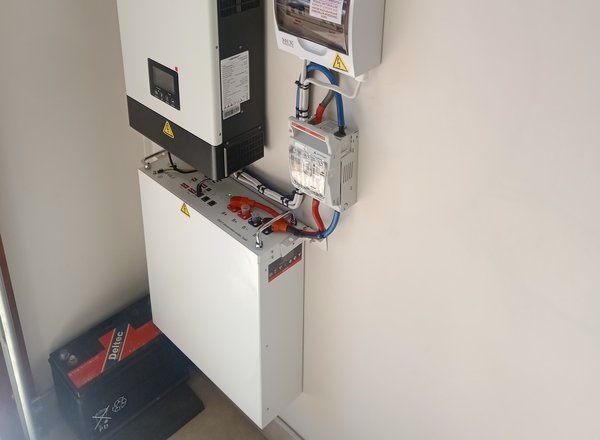 A wall-mounted LiFePO4 battery unit — this is where your solar energy gets stored for nighttime use or brownout backup. About the size of a small filing cabinet. Image: Wikimedia Commons, CC BY-SA 4.0
LiFePO4 Only
The battery chemistry question has a clear answer: Lithium Iron Phosphate (LiFePO4 / LFP) only. Do not let any installer talk you into lead-acid or older lithium chemistries for a new residential install.
Why LFP wins:
- 6,000+ cycle life (16+ years at daily cycling) vs 500–1,000 cycles for lead-acid
- No thermal runaway risk — LFP is stable at high temperatures. NCM/NCA lithium chemistries can ignite or explode under fault conditions.
- Deeper usable depth of discharge — 80–90% usable vs 50% for lead-acid
- Flat discharge curve — voltage stays stable until nearly depleted, meaning consistent inverter performance
- No maintenance — sealed, no water top-ups, no equalization charges
The extra upfront cost vs lead-acid pays back within 2–3 years in replacement cycle savings alone.
See what LiFePO4 batteries look like
- Server rack style: View on Lazada — flat rack-mount units that stack in a server cabinet
- Wall-mount style: View on Lazada — slim rectangular units bolted to the wall beside your inverter
Philippine Pricing (Lazada)
LFP batteries are now widely available on Lazada and Shopee. Pricing has dropped significantly. Real current listings:
| Product | Capacity | Price | Per kWh |
|---|---|---|---|
| James Watt 48V 100Ah | 5.12 kWh | ₱34,999 | ₱6,836/kWh |
| GENTAI 48V 100Ah | 5.12 kWh | ₱42,999 | ₱8,398/kWh |
| Humsienk 48V 100Ah | 5.12 kWh | ₱48,210 | ₱9,419/kWh |
| CST Energy wall-mount | 5.12 kWh | ₱53,800 | ₱10,508/kWh |
| DongJin wall-mount | 5.12 kWh | ₱54,999 | ₱10,742/kWh |
DIY Sourcing vs Installer Markup
Installer-supplied batteries typically run ₱13,500–25,000/kWh — 30–50% more than self-sourced Lazada pricing. If you can source and specify your own battery, you save significantly. The 48V 100Ah (5.12 kWh) format is standard and compatible with all major hybrid inverters. Just verify the BMS (Battery Management System — a built-in circuit board that protects the battery from overcharging, overheating, and over-discharging) brand (Daly, JBD, and JKBMS are all reputable) and confirm it communicates with your inverter via CAN bus or RS485 (communication protocols — basically the "language" the battery and inverter use to talk to each other).
Battery Technology Trends (2026)
| Technology | What It Is | Price | Availability | Should You Wait? |
|---|---|---|---|---|
| LFP (LiFePO4) | Current standard. Iron-based lithium. Safe, 6000+ cycles, proven. | ~$81/kWh globally (₱4,600/kWh wholesale) | ✅ Available now everywhere | No — buy now. This is the rational choice for 2026. |
| Sodium-ion (Na-ion) | Uses sodium instead of lithium — 40-60% cheaper raw materials, no cobalt/nickel, comparable to LFP performance at 150-160 Wh/kg | ~$60-70/kWh projected | ⚠️ CATL Naxtra launched 2025, residential products expected 2027-2028 | Wait if you can. Na-ion will be cheaper and more sustainable than LFP. But if you need a battery NOW, buy LFP. |
| Solid-state | Solid electrolyte instead of liquid — higher energy density, no fire risk, faster charging | Unknown (2-3× LFP initially) | ❌ 5-8 years from residential use | Don't wait. Too far out for residential. |
| Second-life EV batteries | Used EV batteries (70-80% capacity remaining) repurposed for home storage | 30-50% cheaper than new LFP | ⚠️ Available from some PH sellers on Facebook groups | Risky. No warranty, unknown cycle history, may fail sooner. Only if budget is very tight and you understand the risk. |
The Sodium-Ion Disruption
MIT Technology Review named sodium-ion batteries a top 10 breakthrough technology of 2026. CATL's Naxtra line claims 175 Wh/kg — matching LFP. When Na-ion hits residential in 2027-2028, expect battery prices to drop 30-40%. If you're installing solar NOW, buy LFP. If you're planning for 2028+, budget for Na-ion.
Sizing Your Battery Bank
A common mistake is over-building battery capacity hoping to go fully off-grid. The practical targets:
- 5 kWh: Powers essentials (lighting, fans, WiFi, phone charging, TV) for 4–6 hours through a typical brownout. Right-sized for most Tier 2 installs.
- 10 kWh: Full overnight coverage of a medium-consumption household. Also handles extended Meralco outages without generator backup.
- 15+ kWh: True off-grid resilience or high-consumption homes. Usually paired with 6–10 kWp of panels to meaningfully recharge daily.
Start with one battery and your hybrid inverter — most support stacking additional units via parallel connection. Expand when you have real consumption data from a monitoring season.
Mounting & Wiring
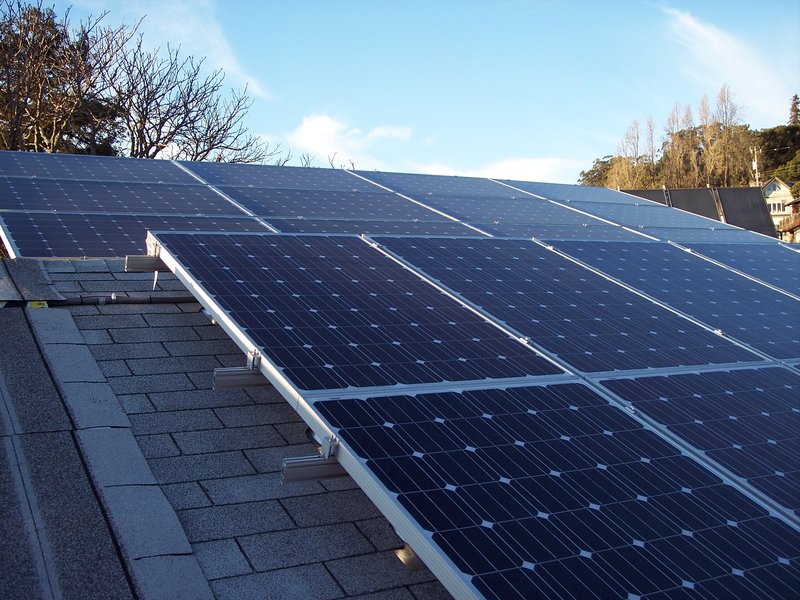 Aluminum mounting rails bolted to a roof — panels slide into these tracks and get clamped down. Think of it like a shelf bracket system for your roof. Image: Wikimedia Commons, CC0

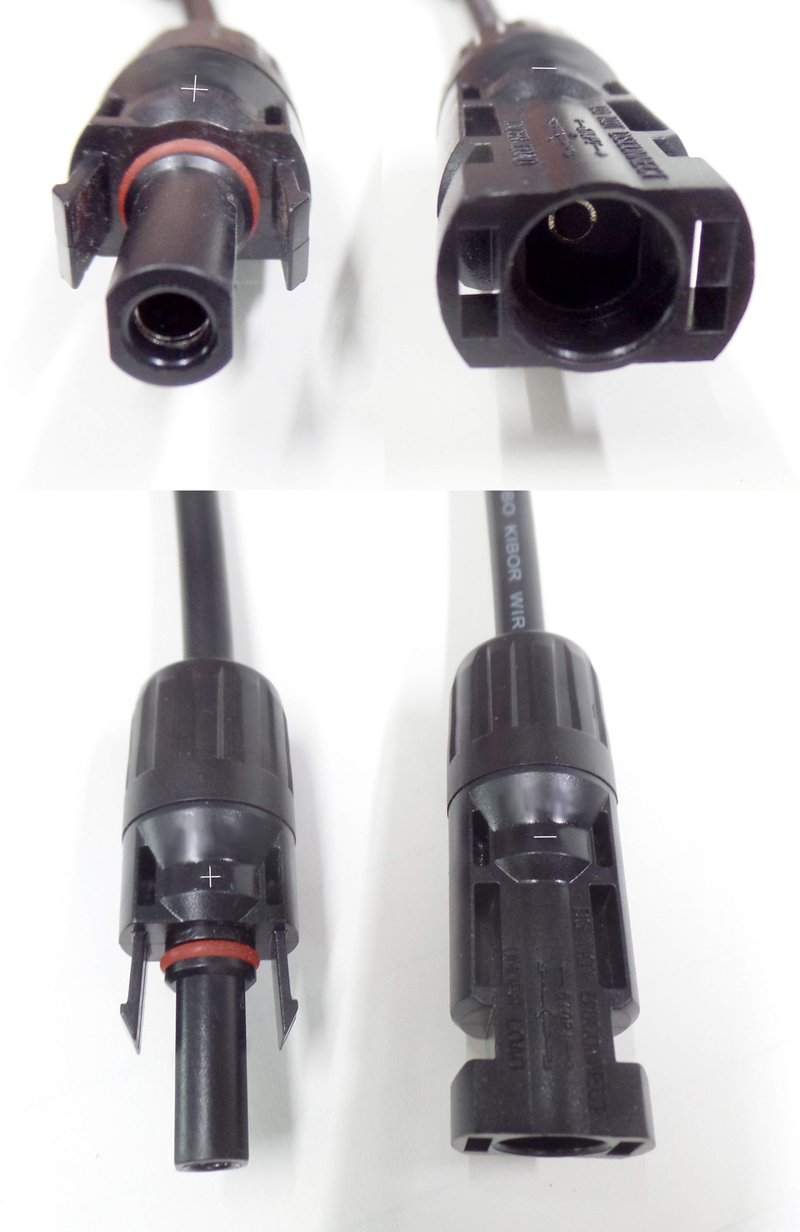 MC4 connectors — waterproof snap-together plugs (like USB but for solar). They click together and lock. Every panel has a pair of these on the back. Image: Wikimedia Commons, CC0

Mounting is unglamorous but it determines whether your system survives Philippine weather for 25 years. Don't cut corners here.
Roof Type Considerations
Metal/GI Sheet Roofing — The most common Philippine roof type and the easiest for solar mounting. Self-drilling screws into purlins, flashing tape on penetrations, done. Most installers default to this and it works well.
Concrete Flat Roof — Requires ballasted or concrete-anchor mounting. Ballasted (weighted) systems avoid penetrations entirely — better for waterproofing. Anchor systems need proper sealing. Either works; ballasted is often preferred for rentals or situations where roof penetrations are a concern.
Clay/Concrete Tile — Requires tile hooks that slip under tiles without breaking them. More complex installation, higher labor cost, and more potential leak points. Ensure your installer has specific tile-roof experience.
Tilt Angle
The Philippines sits at roughly 5–20°N latitude depending on location (Metro Manila is ~14°N). Optimal fixed tilt for maximum annual production is approximately equal to your latitude — around 10–15° for most Philippine locations.
Most residential installs follow the existing roof pitch, which typically falls in this range. For flat roofs, a deliberate 10–15° tilt south-facing maximizes production and allows rain to self-clean the panels.
Grounding and Lightning Protection
Critical. Non-negotiable. The Philippines has one of the highest lightning strike densities in the world, and typhoon season brings sustained high winds alongside electrical activity.
Every properly installed system needs:
- DC grounding: All panel frames and mounting rails bonded to earth ground (connected to a metal rod driven into the soil — gives stray electricity a safe path to the earth instead of through a person)
- AC grounding: Inverter chassis and distribution panel (your circuit breaker box) ground bond
- Surge protection devices (SPDs) (small devices that absorb sudden voltage spikes from lightning or grid fluctuations — like a fuse but reusable): DC-side SPD between string and inverter; AC-side SPD at the inverter output
- Lightning arrester: Separate lightning rod system for rooftop installations (standard in commercial, increasingly common in residential)
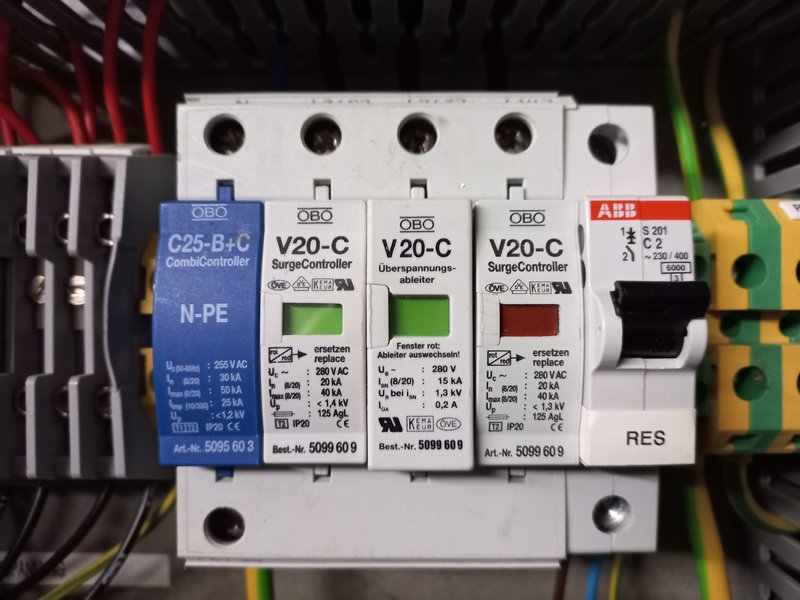 Surge arresters (SPDs) — these small devices protect your inverter from lightning-induced voltage spikes. Critical in Philippine typhoon season. Image: Wikimedia Commons, CC BY-SA 4.0

Ask your installer explicitly what grounding and SPD protection is included. Cheap installers skip this. It's a ₱3–8K line item that protects a ₱300–800K system.
DC Wiring and Safety Switches
- DC cables (thick red and black wires that carry power from panels to inverter): Use solar-rated (TUV/UL) twin-core 4mm² or 6mm² for string runs. Standard electrical wire is not UV-rated and will degrade on a hot rooftop.
See what DC solar cables look like
View on Lazada — thick red and black UV-resistant wires, sold per meter. These run from your rooftop panels down to the inverter.
- MC4 connectors (waterproof snap-together plugs — like USB but for solar panels, they click together and lock): Industry standard. Ensure proper crimping tools are used — hand-forced MC4 connectors are a fire hazard.
- DC isolator switch (an emergency shutdown switch for the solar panels — flip it and the panels stop sending power): Required at both the panel array and inverter. Allows safe disconnection of panels from the inverter for maintenance.
See what a DC isolator switch looks like
View on Lazada — a yellow or red rotary switch mounted near the inverter. You turn it to cut power from the panels for maintenance.
- Fire-rated conduit (protective tubing that wires run through): Where cables penetrate the roof or pass through living spaces, use fire-rated conduit. A DC arc fault can sustain combustion even after breaker trip because solar panels continuously produce power in daylight.
DC Arc Faults
Unlike AC circuits, DC faults from solar strings do not self-extinguish when a breaker opens. A high-resistance DC arc on poorly crimped or damaged cables can sustain 400–600V DC and start a rooftop fire. Proper wire management, quality MC4 connectors, and DC arc-fault circuit interrupters (AFCIs — a safety device that detects dangerous electrical arcs and cuts power automatically) are your protection. AFCIs are expensive (~₱8–15K) but increasingly available in quality hybrid inverters as a built-in feature — check your inverter spec sheet.
Quick Component Checklist
Before signing any installation contract, verify these items:
- Panel model, wattage, cell type, and warranty terms (product + performance)
- Inverter brand/model, hybrid vs grid-tied, battery compatibility
- Battery chemistry confirmed as LiFePO4, BMS brand, inverter communication protocol
- Mounting system: rail brand, anchor type, waterproofing method
- DC cabling: solar-rated, correct gauge for string voltage/current
- DC isolator switches at array and inverter
- Surge protection devices (DC and AC sides)
- Grounding scheme (panel frames, rails, inverter chassis, distribution board)
- Net metering application assistance (if applicable)
Where to Buy
| Platform | What to Search | Link |
|---|---|---|
| Lazada PH | "solar panel 550w", "deye hybrid inverter", "lifepo4 battery 48v" | Solar Panels / Inverters / Batteries |
| Shopee PH | Same searches | Solar Panels / Inverters / Batteries |
| AliExpress | Bulk orders, 2-4 week shipping | Solar Panels / Inverters |
| JFL Solar | PH distributor, wholesale pricing | jflsolar.com |
| Facebook Marketplace | "solar panel" — sometimes secondhand at big discounts | facebook.com/marketplace |
Jargon Decoder — What Sellers and Posts Actually Mean
When browsing FB groups, Lazada listings, or talking to installers, you'll hear technical terms. Here's what they actually mean:
Solar Panel Jargon
| Term | Plain English | Why Care |
|---|---|---|
| Voc | Max voltage when panel is disconnected (like water pressure with tap closed) | Must not exceed inverter's max input voltage |
| Isc | Max current the panel can produce | Determines fuse and wire sizing |
| STC | Lab test conditions (25°C) — NOT real PH conditions | Real output is always lower than STC rating |
| Pmax | The panel's wattage (e.g., 620W) | The number in the product name |
| Bifacial | Generates power from both front AND back | 5-15% bonus on reflective roofs |
| Half-cut | Cells sliced in half for better shade tolerance | Standard on all 500W+ panels |
| N-Type / P-Type | Silicon type. N-Type is newer and better | N-Type = higher efficiency, less degradation |
Inverter Jargon
| Term | Plain English | Why Care |
|---|---|---|
| MPPT | Brain that squeezes max power from panels | More MPPT inputs = handles different panel directions |
| String | Panels wired in series (daisy-chained) | Each MPPT handles one string |
| Anti-islanding | Auto-shuts off during brownouts to protect utility workers | Required by law for grid connection |
| Zero-export | Prevents sending power to grid (meter won't spin backward) | Need this if no net metering yet |
Battery Jargon
| Term | Plain English | Why Care |
|---|---|---|
| SOC | How "full" the battery is (like phone battery %) | Don't let it drop below 20% |
| DOD | How much you actually use (80% DOD = use 80%, keep 20%) | Higher DOD = more energy but shorter life |
| Cycle life | Charge/discharge cycles before 80% capacity | 6000+ = ~16 years daily cycling |
| BMS | Brain that protects battery from overcharge/fire | No BMS = fire risk. Must have. |
| CAN bus / RS485 | Communication cable between battery and inverter | Without it, inverter can't manage charging |
Wiring Jargon
| Term | Plain English | Why Care |
|---|---|---|
| MC4 | Waterproof snap-together connectors for solar panels | Buy genuine IP67-rated. Cheap fakes corrode. |
| mm² | Wire thickness (higher = thicker = less power loss) | 4mm² for panels, 6mm² long runs, 25mm² batteries |
| DC-MCB | Resettable fuse for DC side | DC and AC breakers are NOT interchangeable |
| SPD | Surge protector — absorbs lightning spikes | Critical in PH typhoon season |
| ATS | Auto-switches between grid and solar power | Seamless power source switching |
What to Look For When Buying
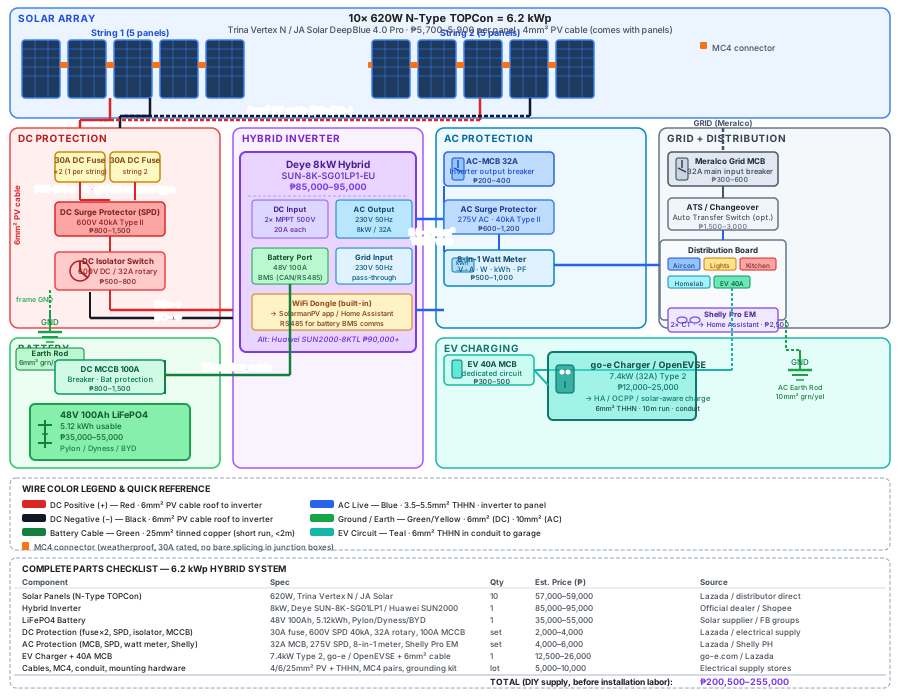 Every component in a 6.2 kWp hybrid solar system with exact specs, wire sizes, and protection devices. Use this as your shopping checklist.
You've decided on your components — now here's what to check before handing over your money. These are the specs and red flags that separate a good purchase from an expensive mistake.
Solar Panels — What to Check
| Check | What to Look For | Red Flag |
|---|---|---|
| Brand & tier | Tier-1 manufacturer (Trina, JA Solar, Jinko, LONGi, Canadian Solar) | Unknown brand with no datasheet |
| Wattage rating | Match your plan (550W or 620W) — check the label on the back | "500W" panels that are actually 100W with inflated marketing |
| Cell type | Monocrystalline (mono). N-Type TOPCon for 620W+ | Polycrystalline (poly) — outdated technology |
| Warranty | 25-year performance warranty, 12+ year product warranty | No written warranty or warranty from a company that might not exist in 5 years |
| Datasheet | Ask for the official PDF datasheet — it has all real specs | Seller can't provide a datasheet |
| Physical inspection | No cracks, chips, yellowing, or scratches on the glass. Check the junction box on the back is sealed. | Visible damage, loose junction box, mismatched cells |
| Certifications | IEC 61215 and IEC 61730 (international safety standards) | No certification markings |
The Lazada/Shopee '500W Panel' Scam
Many online listings advertise "500W solar panels" for ₱479-698. These are NOT 500W panels — they're typically 30-50W panels with inflated wattage claims. A real 500W+ panel weighs ~28kg and costs ₱4,000+. If it weighs 2kg and costs ₱500, it's a portable phone charger, not a home solar panel. Always check the physical dimensions and weight.
Inverters — What to Check
| Check | What to Look For | Red Flag |
|---|---|---|
| Type | Hybrid (if you want battery), Grid-tied (if no battery) | "Modified sine wave" — this is for camping, not home solar |
| Power rating | Match your system: 5kW, 8kW, 10kW, etc. | Rating doesn't match your panel array size |
| MPPT inputs | 2 MPPT inputs minimum for residential (one per string) | Single MPPT for a large system |
| Battery voltage | 48V for LFP batteries (most common) | 12V/24V — these are small off-grid systems, not whole-home |
| WiFi/Monitoring | Built-in WiFi dongle for app monitoring. Check if it works with Home Assistant. | No monitoring capability — you're flying blind |
| Warranty | 5-10 year manufacturer warranty | Less than 5 years or no warranty |
| Anti-islanding | Must have anti-islanding protection (safety feature that shuts off during brownouts — required for grid connection) | No anti-islanding = not legal to connect to Meralco grid |
| Certifications | IEC 62109, Philippine ERC certification | No local certification |
Batteries — What to Check
| Check | What to Look For | Red Flag |
|---|---|---|
| Chemistry | LiFePO4 (LFP) ONLY — safest, longest life | Lead-acid (old tech), Lithium NMC (fire risk for home use) |
| Voltage | 48V nominal (matches most hybrid inverters) | 12V/24V unless you're building a small off-grid system |
| Capacity | 100Ah = 5.12 kWh per battery. Buy what you need for your backup hours. | Suspiciously cheap — may be used/recycled cells |
| BMS | Built-in Battery Management System with Bluetooth monitoring | No BMS = dangerous, no cell balancing |
| Cycle life | 6,000+ cycles at 80% DoD (Depth of Discharge) | Less than 3,000 cycles |
| Communication | CAN bus or RS485 port for inverter communication (the cable that lets the battery "talk" to the inverter) | No communication port — battery and inverter can't coordinate |
| Warranty | 5-10 year warranty | Less than 3 years |
Test Before You Buy
Ask the seller to show you the battery's Bluetooth app reading. A healthy new LFP battery should show:
- All cell voltages within 0.02V of each other (e.g., 3.28V, 3.29V, 3.28V, 3.30V)
- SOC (State of Charge) reading matches the voltmeter
- No error codes in the BMS
If cells are wildly unbalanced (e.g., 3.1V and 3.4V), the battery has bad cells.
Mounting & Wiring — What to Check
| Component | What to Look For | Red Flag |
|---|---|---|
| Mounting rails | Aluminum alloy (6005-T5), anodized for corrosion resistance. Length matches your panel layout. | Steel rails (rust in PH humidity), uncoated aluminum |
| Clamps | Mid-clamps and end-clamps sized for your panel thickness (typically 30-35mm) | Wrong thickness = panels can come loose in typhoon |
| MC4 connectors | IP67 rated (waterproof), genuine branded (Stäubli, Amphenol, or panel manufacturer's own) | Cheap unbranded MC4s — they leak water and corrode |
| DC cables | PV-rated, UV-resistant, 4mm² or 6mm² cross-section (the thickness of the copper inside). Red for positive, black for negative. | Regular household wire (not UV-rated, will crack on roof in 2 years) |
| DC isolator switch | Rated for your system's maximum voltage and current. Typically 600V DC, 32A for residential. Rotary type (twist to disconnect). | AC-rated switch used for DC — DC arcs differently and can start fires |
| Surge protector (SPD) | DC-rated SPD (Type 2), rated for your string voltage. Typically 600V DC for residential. | AC surge protector used on DC side — won't protect against lightning |
| Grounding wire | 6mm² or larger copper grounding wire, green/yellow insulation. Grounding rod: copper-bonded, 1.5m minimum length. | No grounding = your entire metal roof becomes a lightning hazard |
| Cable glands/conduit | UV-rated conduit for outdoor cable runs. IP65+ cable glands where cables enter the house. | Exposed cables with no protection — rain, rats, and UV will destroy them |
Wire Sizing Quick Reference
For beginners who don't know what "4mm²" means — here's a plain-language guide:
| What It Connects | Wire Size | Why This Size | Where to Buy |
|---|---|---|---|
| Panel to panel (in a string) | 4mm² PV cable | Handles up to ~30A. Comes pre-attached to most panels via MC4. | Usually included with panels |
| String to inverter (DC side) | 6mm² PV cable | Longer run = thicker wire to reduce power loss. UV-rated for roof. | Lazada: PV cable 6mm² |
| Inverter to battery | 25mm² battery cable | High current (up to 100A). Short run but thick wire required. | Lazada: battery cable 25mm² |
| Inverter to distribution board (AC side) | 3.5-5.5mm² THHN wire | Standard household AC wiring. Size depends on inverter output. | Any electrical supply shop |
| Grounding | 6mm² green/yellow | Connects all metal parts to earth ground. | Any electrical supply shop |
| EV charger circuit | 6mm² THHN (for 32A) | Dedicated circuit from DB to charger location. | Any electrical supply shop |
The Golden Rule of Wire Sizing
When in doubt, go ONE size thicker than the minimum. Thicker wire = less power loss = more energy reaching your home. The cost difference is small (₱500-1,000 more for a full system), but the efficiency gain lasts 25 years.
Previous: ← Budget Tiers | Next: Home Assistant Integration →