Residential Solar — EV Charging
EV Charging with Solar
If you're planning to own an EV — or already do — your solar install becomes dramatically more valuable. Charging at home with your own solar power is effectively free fuel. This section covers which chargers play well with Home Assistant, how to dynamically route excess solar into your car battery, and why you should wire for EV charging right now even if you don't own one yet.
Philippine EV Context
The PH EV market is growing steadily. More models are landing — from BYD and MG to local conversions — and the government has been pushing EV adoption through tax incentives and charging infrastructure programs. That said, public DC fast charging is still concentrated in Metro Manila and a handful of provincial highways. Outside those corridors, Level 2 home charging is the practical standard.
Level 2 means single-phase AC charging at 3.3–7.2 kW. Most Philippine EVs support it. A full charge on a typical EV (50–70 kWh battery) takes 7–12 hours overnight — which is fine when you're sleeping and your solar isn't producing anyway.
One thing to factor into your system sizing: an EV adds roughly 200–300 kWh/month to your household consumption, depending on driving distance. That's the equivalent of running two mid-size air conditioners. If you're sizing a new solar system with EV charging in mind, model this load explicitly — it can shift you from a 6 kWp recommendation to 8–10 kWp.
Charger Recommendations for PH + HA
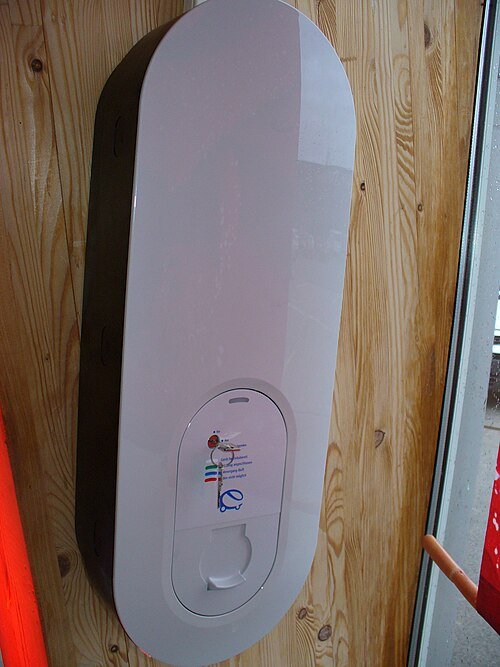 A residential EV wallbox — a compact wall-mounted box installed in your garage or carport. Plugs directly into your car. Image: Wikimedia Commons, CC BY-SA 3.0

Not all Level 2 EV chargers are equal when it comes to Home Assistant integration and solar-aware charging. Here are the top options ranked for the Philippine homelab context:
| Rank | Charger | HA Integration | Local Control | Solar Excess | Price (Est.) | Notes |
|---|---|---|---|---|---|---|
| 1 | go-e Charger | HACS | ✅ MQTT / HTTP / Modbus | Built-in surplus mode | ~₱30–45K | Community #1 pick for HA solar |
| 2 | OpenEVSE | Native core | ✅ WiFi API | Via HA automation | ~₱25–35K | Open-source, ESP32-based, hackable |
| 3 | Any OCPP charger | HACS OCPP | Varies | Via SolarCharger HACS | Varies | Most flexible — broad hardware support |
| 4 | Zappi (myenergi) | HACS | Via myenergi hub | Native Eco / Eco+ modes | ~₱50–70K | Best out-of-box solar divert, no HA needed |
See what EV wallboxes look like
- go-e Charger: View on official store — compact white box (~30cm), mounts on wall or pedestal
- OpenEVSE: View on official store — open-source ESP32-based charger
These are wall-mounted boxes about the size of a small book, installed in your garage or carport.
go-e Charger is the community favourite if you're already running Home Assistant. Its local API is well-documented, latency is low, and the built-in surplus charging logic means you can have it working without writing a single automation — though you'll want HA to fine-tune it.
OpenEVSE is the pick for tinkerers. It's fully open-source (hardware and firmware), runs on ESP32, and exposes a clean WiFi API. HA has native core support. Solar excess routing requires a simple power-monitoring automation, but the community templates are mature.
OCPP chargers are the safest bet if you want hardware flexibility. The HACS OCPP integration covers a wide range of brands. Pair with the SolarCharger HACS integration for multi-EV solar scheduling.
Zappi from myenergi has the most polished built-in solar divert (Eco and Eco+ modes work without HA), but it's the priciest option and requires a hub for full remote control. Good choice if you'd rather not automate.
Solar Excess EV Charging
The core idea: instead of exporting surplus solar to the grid (often at a terrible feed-in rate), you route that power into your car.
How it works with PV Excess Control (HACS):
- Your solar inverter and grid meter expose real-time power readings to Home Assistant.
- PV Excess Control monitors grid export continuously (every 5–10 seconds).
- It dynamically adjusts the charger's current setpoint — between the 6A minimum and 32A maximum allowed by Level 2 — to absorb available surplus.
- When a cloud passes and solar drops, the current steps down. When the sun returns, it steps back up.
Example scenario:
5 kW of solar excess → charger commanded to ~22A (single-phase, 230V) → ~5 kW flows into the car → zero grid import during charging
The SolarCharger HACS integration extends this further with:
- Multi-EV support — priority ordering when two cars are home
- Deadline-based charging — "reach 80% by 7:00 AM regardless of solar" for work days
- Sun elevation triggers — start charging only when the sun clears your roof angle and production is reliable
The practical result: in a well-sized system (8+ kWp), you can often charge 20–30 kWh into the car on a clear day using nothing but solar surplus — effectively driving on sunshine.
How Solar EV Charging Flows Through the Day
The diagram below shows a typical day with a 6 kWp system and a VinFast VF3. Notice how the EV charging slot fits neatly inside the solar production window — the car runs entirely on sunshine with zero grid draw:
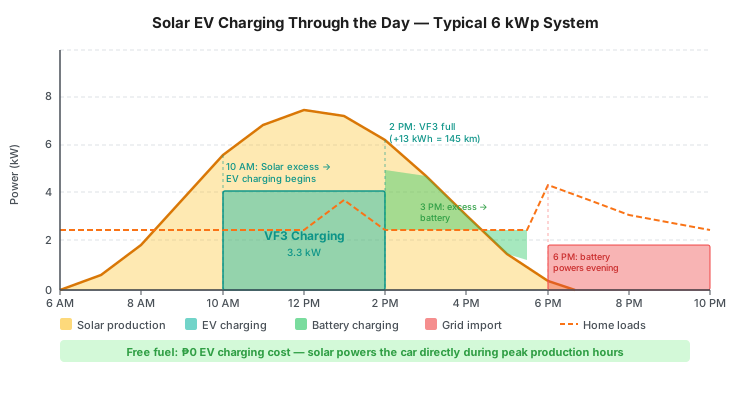 Solar production (yellow) peaks around noon. The VF3 charges (teal block, 10 AM–2 PM) using excess solar. Remaining surplus charges the battery (green) in the afternoon. A small grid import (red) handles evening loads after sunset.
Real EV Examples: Sizing Your Solar for Philippine EVs
Here are two popular EVs available in the Philippines and exactly what solar system you need to charge them:
VinFast VF3 — The Easy Match
| Spec | Value |
|---|---|
| Battery | 18.64 kWh |
| Range | ~210 km |
| Level 2 charge time | ~5 hours (10-100%) |
| Level 2 charging draw | ~3.3 kW |
| DC fast charge | 36 min (10-70%) |
| PH Price | ₱605,000+ |
The VF3's small battery makes it a perfect match for residential solar. At only 3.3 kW draw, it's less than an inverter aircon — even a 5 kWp system handles it easily.
Daily solar charging scenario (6 kWp system):
| Time | What's Happening |
|---|---|
| 8:00 AM | Solar starts producing, powers home loads |
| 10:00 AM | Excess solar (~3-4 kW) starts charging VF3 via PV Excess Control |
| 1:00 PM | VF3 gains ~10 kWh in 3 hours = ~110 km range |
| 2:00 PM | VF3 fully charged, remaining solar charges battery |
| Daily fuel cost: ₱0 |
Minimum system: 5 kWp + 5kW inverter — the VF3 is effortless.
Geely EX2 — Needs More Headroom
| Spec | Value |
|---|---|
| Battery | 39.4 kWh (2x the VF3) |
| Range | ~325 km (WLTP) |
| Level 2 charge time | ~6.5 hours |
| Level 2 charging draw | ~6.1 kW |
| DC fast charge | 25 min (30-80%) |
| PH Price | ₱950,000-1,050,000 |
The EX2 draws 6.1 kW on Level 2 — almost double the VF3. This changes the inverter sizing:
| Inverter Size | EX2 (6.1 kW) + Home Loads (2-3 kW) | Verdict |
|---|---|---|
| 5 kW | ❌ 8-9 kW needed, inverter maxed out | Won't work |
| 8 kW | ⚠️ Works but tight — stagger heavy loads (no aircon while charging) | OK with PV Excess Control managing loads |
| 10 kW | ✅ Comfortable headroom | Recommended for EX2 |
Daily solar charging scenario (6.2 kWp system + 8kW inverter):
| Time | What's Happening |
|---|---|
| 8:00 AM | Solar starts, powers home |
| 10:00 AM | Peak solar (~5-6 kW), PV Excess Control starts EV charging |
| 10:00 AM | HA automation turns off aircon, redirects power to EV |
| 1:00 PM | EX2 gains ~18 kWh in 3 hours = ~150 km range |
| 2:00 PM | EV charging pauses, aircon resumes, battery charges |
| Daily fuel cost: ₱0 (with smart load management) |
VF3 vs EX2 for Solar Owners
The VF3's 18.64 kWh battery charges fully from a few hours of solar — perfect for daily city driving. The EX2's 39.4 kWh gives more range but demands more from your solar system. If you're buying an EV specifically to pair with solar, the VF3 is the easier match. If you need 300+ km range, budget for a 10kW inverter with the EX2.
Quick Reference: Solar System Size per EV
| EV Model | Battery | L2 Draw | Min Inverter | Recommended System |
|---|---|---|---|---|
| VinFast VF3 | 18.64 kWh | 3.3 kW | 5 kW | 5-6 kWp + 5kW hybrid |
| Geely EX2 | 39.4 kWh | 6.1 kW | 8 kW | 6-8 kWp + 10kW hybrid |
| BYD Dolphin | 44.9 kWh | 7 kW | 8 kW | 8+ kWp + 10kW hybrid |
| Tesla Model 3 | 60 kWh | 7.4-11 kW | 10 kW | 10+ kWp + 12kW hybrid |
Bidirectional Charging — Your EV as a Home Battery (V2H/V2G)
The biggest EV charging innovation of 2026: your car can power your house during brownouts.
| Technology | What It Does | How It Works |
|---|---|---|
| V2L (Vehicle-to-Load) | Powers small appliances directly from your EV's charging port | Plug in a fan, laptop, or fridge directly to the car. Most EVs support this already. |
| V2H (Vehicle-to-Home) | Your EV battery powers your entire house during a brownout | Requires a bidirectional charger. Your EV's 40-60 kWh battery becomes a massive home backup — 10× bigger than a typical home battery! |
| V2G (Vehicle-to-Grid) | Your EV sells electricity back to the grid during peak demand | Still experimental in PH. In other countries, this earns $120-400/year in demand response payments. |
What This Means for Philippine Solar Owners
Imagine: it's a brownout, your 5 kWh home battery is running low, but your Geely EX2 has 30 kWh still in its battery. With V2H, your car powers your house for 10+ hours — no generator needed.
Available bidirectional chargers (2026):
| Charger | V2H Power | V2G | Price | Status |
|---|---|---|---|---|
| Wallbox Quasar 2 | 12.5 kW discharge | Yes | ~$4,000-5,000 | Available internationally |
| Enphase IQ Bidirectional | 11.5 kW discharge | Yes | ~$3,500-4,500 | Expected 2026 |
| SolarEdge Bidirectional | TBD | Yes | ~$12,000-15,000 | Expected late 2026 |
PH Availability
Bidirectional chargers are NOT yet widely available in the Philippines. The technology requires your EV to support it (VinFast VF3 does NOT — the Geely EX2 status is unconfirmed). Check with your EV manufacturer before investing. For now, a standard L2 charger + separate home battery is the reliable approach.
Future-Proofing
Even if you can't use V2H today, wire your EV charger circuit for bidirectional capability (larger wire gauge, dedicated sub-panel). When V2H chargers become available in PH, you'll be ready without rewiring.
Future-Proofing Your Installation
Wire Now, Charge Later
Pre-wire a dedicated 40A circuit (a dedicated heavy-duty power line — your installer runs new wires from your electrical panel to the charger location) from your distribution board (your circuit breaker box) to your garage or carport today, even if you don't own an EV yet. The cost difference is dramatic.
| Timing | Scope | Estimated Cost |
|---|---|---|
| During solar install or new construction | Wire + 40A breaker, conduit (protective tubing that wires run through) to garage | ₱5,000–10,000 |
| Retrofit later (wall breaking, new conduit, electrician revisit) | Same end result, far more labour | ₱20,000–40,000 |
The wall is already open when your solar installer is on-site. Adding a conduit run costs almost nothing at that point. Doing it later means breaking walls, running new conduit through finished surfaces, and paying an electrician's minimum callout on top of materials.
Two more considerations when future-proofing:
- Inverter headroom — A Level 2 charger draws up to 7.2 kW. If your inverter is already near its rated AC output, adding EV charging will either trip protection or force the charger to throttle down. Size your inverter with at least 7.2 kW of headroom above your expected household peak load.
- Panel capacity — Your main distribution board (circuit breaker box) needs a free 40A breaker slot and sufficient total ampacity (the total amount of electricity it can handle). If you're already running heavy loads (multiple air cons, water heater, inverter AC output), verify the main breaker rating before adding EV charging. Your home's main electrical capacity (think of it like water pressure — you need enough flow for all your appliances plus solar plus the EV charger): a 100A main is often tight; 150–200A gives you room.
Summary
EV charging turns your solar install from a bill-reduction tool into a genuine energy ecosystem. The best chargers for the Philippine HA setup are go-e Charger (easiest solar integration) and OpenEVSE (most hackable). Dynamic surplus charging via PV Excess Control can route 20–30 kWh of free solar into your car on a good day. And whatever you do — run that 40A conduit (protective tubing for the EV charger wiring) now while the walls are open.
Previous: ← Home Assistant Integration | Next: Installation Guide →